

What Is a Negative Pressure Ward /Patient Room ?
A negative pressure ward is a type of specialized medical isolation ward. Its core feature is that the air pressure inside the ward is lower than the pressure outside it. This pressure difference creates a unidirectional airflow, which prevents the contaminated air inside the ward from escaping to the outside environment. It is primarily used to treat patients infected with highly contagious, airborne diseases (such as COVID-19, tuberculosis, and influenza).
I. Working Principle: A "One-Way In, No Out" Airflow Pattern
1. Pressure Difference Design.
The air pressure inside the ward is maintained 5~15 Pa lower than that in adjacent areas like corridors and medical staff offices. Air can only flow from the higher-pressure outside into the lower-pressure ward; contaminated air inside the ward cannot escape on its own.
2. Professional Ventilation and Filtration System
▪ Air Intake: Fresh outside air is filtered through a High-Efficiency Particulate Air (HEPA) filter before being supplied into the ward, ensuring the incoming air is clean.
▪ Air Exhaust: Contaminated air inside the ward (containing pathogens exhaled by patients) must first pass through HEPA filtration for disinfection and sterilization. Only after meeting safety standards is it discharged outdoors (or to a designated area),it never recirculates back into the hospital's internal air supply.
▪ The system provides continuous air exchange (typically 12~15 air changes per hour or more) to maintain a stable negative pressure and fresh air quality inside the ward.
II. Core Functions: Blocking the Spread of Airborne Infectious Diseases
1. Pathogen Containment. It prevents droplets and aerosols carrying viruses or bacteria exhaled by patients from spreading outside the ward, protecting medical staff, other patients, and the hospital environment, and reducing the risk of cross-infection.
2. Protection for Medical Staff. Although healthcare workers must wear protective suits, masks, and other gear when entering the ward, the negative pressure environment creates a physical barrier that minimizes their exposure risk, serving as a "safety shield" for treating airborne infectious diseases.
3. Improved Ward Environment. Continuous air replacement effectively reduces the concentration of pathogens in the ward air while maintaining optimal temperature and humidity, which supports patient recovery.
III. Application Scenarios
▪ Treating confirmed cases of airborne infectious diseases. Such as tuberculosis, influenza A (H1N1), and COVID-19 infections.
▪ Emergency care and treatment of certain virulent infectious diseases. Such as SARS and Middle East Respiratory Syndrome (MERS).
▪ Isolation rooms in fever clinics and infectious disease wards of hospitals usually adopt a negative pressure design.
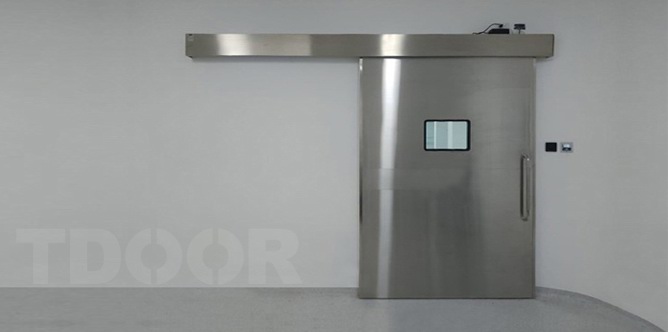
To the content above, TSTC hermetic sliding doors and ward doors will be the ideal doors for the negative pressure ward /patient room .
 General Safety Functions /Devi
 Advantages of Underground Driv
 Simplified Process of Powder C
 Automatic Curved Sliding Door