

How to Extend the Service Life of Medical Airtight Doors |TSTC
Medical airtight doors are critical facilities for operating rooms, isolation wards and clean laboratories, and proper daily maintenance is essential to keep stable sealing performance, reliable sensing function and long service life. With more than 10 years of professional experience in the automatic door industry, TSTC Automatic Doors shares practical maintenance guidelines as follows.
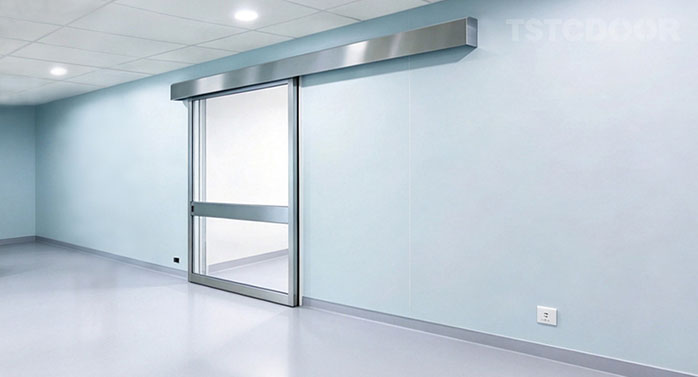
1. Carry out regular cleaning for medical airtight doors, tempered glass panels and hardware accessories, and remove dust on cleanroom doors in a timely manner. Even for stainless steel panels, long-term accumulation of dust and stains on the control panel may contain chemical substances that gradually corrode the stainless steel surface. If left untreated over time, the door body will suffer surface damage, which will adversely affect the operating performance of the medical airtight door.
2. If oil stains or other stubborn contaminants attach to the medical airtight door, do not use strong acid or strong alkaline cleaning agents. Such corrosive liquids will not only dull the surface finish of the door frame of single-leaf automatic doors, but also erode hardware parts and destroy their protective films and oxide layers. Special attention is required during wall cleaning with sulfuric acid-based cleaners, make sure that cleanroom doors and windows are not splashed or contaminated.
3. Promptly clear granular debris and dirt accumulated inside the door frame. Built-up dirt may block drainage outlets and cause drainpipe clogging and leakage. Serious leakage will continuously impair the normal operation of radiation-shielding sensor doors, shorten their service life and bring potential safety risks.
4. When operating automatic ward doors, apply moderate force and maintain a steady speed during opening and closing. Avoid violent pulling or pushing of the door leaf.
5. When passing through medical airtight doors, please refrain from rushing. Prevent hard objects from striking the radiation-shielding sensor door or scratching the surface of the door frame.
6. If you notice stiff movement, unsmooth opening or other abnormal faults during operation, troubleshoot the problem in a timely manner. If on-site personnel cannot diagnose and fix common faults, contact the manufacturer or authorized agent of the radiation-shielding sensor door immediately for prompt resolution. Stop using the door before repairs are completed to avoid safety accidents.
 How to Extend the Service Life
 How to Select Right Automatic
 General Safety Functions /Devi
 Advantages of Underground Driv