

Ultra-Clear Glass And Low‑E Glass for Automatic Doors
To Automatic Doors, like automatic revolving door or automatic sliding door, the frequently used glass for door body are ordinary laminated glass or tempered glass, however, the request for ultra-clear glass and Low‑E glass are more and more in recent years, what about the features and differences for these two glass ?
In short, the Ultra-clear glass features high light transmittance and colorless vision, while Low‑E glass focuses on heat insulation and thermal preservation. The two are not mutually exclusive and are often combined into ultra-clear Low‑E insulated glass, delivering both high transparency and energy efficiency.
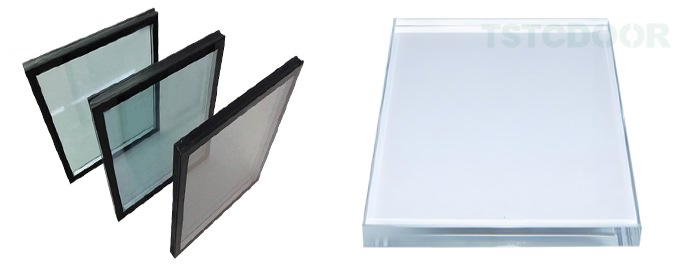
1. Core Definition & Appearance
Ultra-Clear Glass (Low-Iron Glass). Made with ultra-low iron content (roughly one-tenth of conventional glass).Light transmittance ≥ 91%.No obvious green tint on the edge with crystal-like clarity and accurate color restoration.
Low‑E Glass (Low-Emissivity Glass). Coated with metal or metal oxide films (mainly silver film) on the surface.It reflects infrared rays while allowing visible light to pass through.A uniform iridescent oil-film reflection can be seen from the side.
2. Key Performance Comparison
▪ Light Transmittance & Color Difference
Ultra-clear glass: 91%–92% light transmittance, zero color cast and no green edge tint for a clear viewing experience.
Low‑E glass: 50%–80% light transmittance (high-transmittance type ≥ 70%), with slight blue, gray or green tint and slightly dim vision.
▪ Heat Insulation & Thermal Retention (Core Difference)
Ultra-clear glass: Almost no heat insulation; high ultraviolet transmittance, leading to overheating in summer and accelerated fading of furniture.
Low‑E glass: Excellent heat insulation and thermal preservation. It reflects infrared heat as following. Summer:Blocks outdoor heat and reduces indoor temperature by 3–5°C. Winter: Retains indoor heat and cuts heating energy consumption. Blocks over 90% of ultraviolet rays to prevent furniture aging.
▪ Safety & Self-Explosion Rate
Tempered ultra-clear glass: Fewer impurities, with an extremely low self-explosion rate of about 1/10,000.
Tempered Low‑E glass: Same self-explosion rate as ordinary tempered glass (3/1000–5/1000); the coating does not affect structural safety.
▪ Price
Ultra-clear glass: 30%–50% more expensive than standard clear glass.
Low‑E glass: More than twice the price of ordinary glass; double-silver and triple-silver Low‑E glass cost extra.
Ultra-clear Low‑E glass: Premium option with combined advantages and the highest cost.
3. Application & Selection Guide
▪ Choose Ultra-Clear Glass If We Need:
Ultimate transparency and landscape viewing: floor-to-ceiling windows, sunrooms and high-end exhibition halls.
Maximum daylighting for dark rooms or north-facing windows.
Minimalist decoration style with high-grade colorless visual effect.
▪ Choose Low‑E Glass If You Need:
Heat reduction for west-facing windows and sun-exposed spaces.
Heat retention for cold climate areas to save heating costs.
UV protection and anti-glare performance for bedrooms and studies.
▪ Optimal Solution: Ultra-Clear Low‑E Insulated Glass
Outer ultra-clear glass for high transparency + inner Low‑E glass for energy saving, with an air cavity for sound insulation. Ideal for high-end doors, windows and sunrooms.
4. Simple Identification Methods
Ultra-clear vs ordinary glass: Check the edge; ultra-clear glass is colorless or slightly light blue, while ordinary glass shows an obvious green tint.
Low‑E vs ordinary glass: Genuine Low‑E glass presents iridescent reflection on the edge, which ordinary glass does not have.
 General Safety Functions /Devi
 Advantages of Underground Driv
 Simplified Process of Powder C
 Automatic Curved Sliding Door